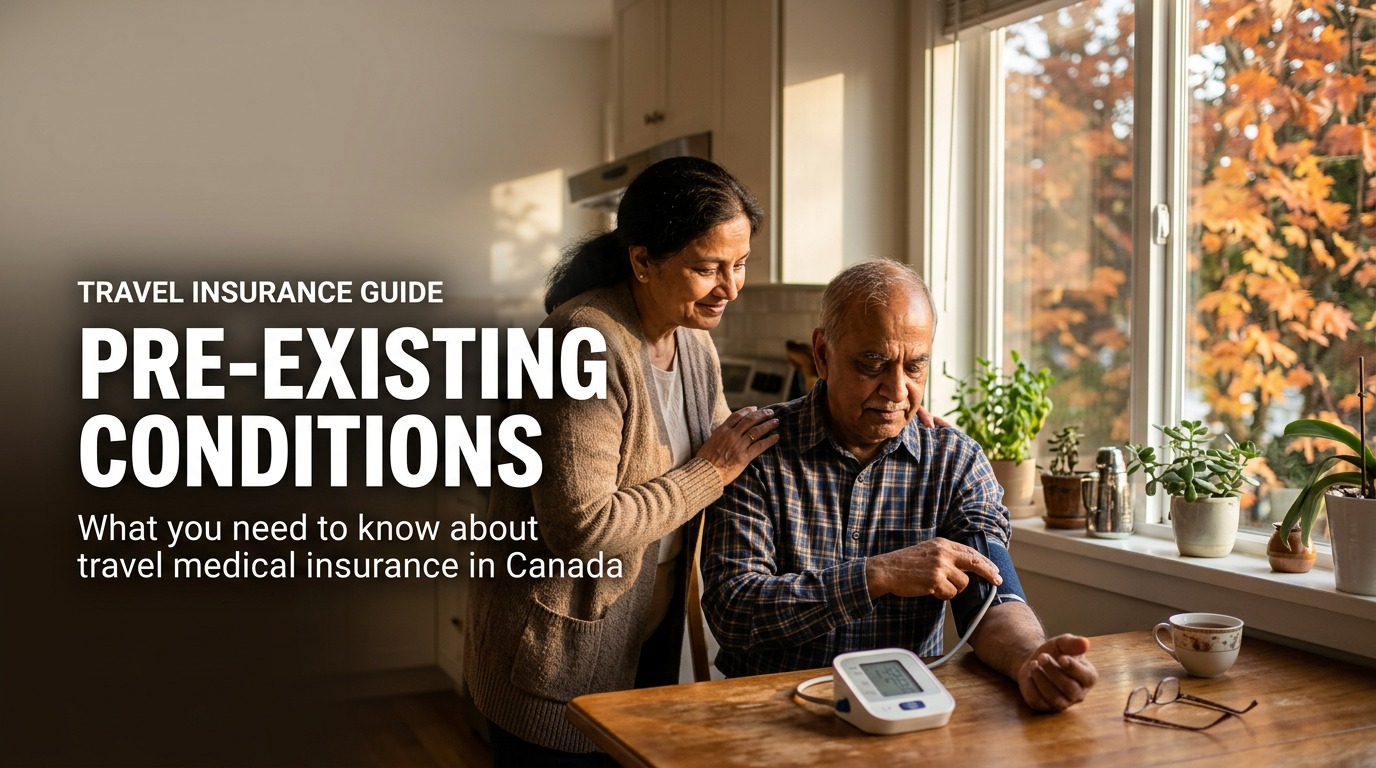

Thousands of parents, grandparents, and family members visit Canada every autumn and winter to spend the holidays with loved ones. Many of these visiting family members live with managed, everyday health conditions such as high blood pressure, type 2 diabetes, or mild arthritis. When purchasing visitor insurance, adult children and permanent residents often worry about whether these conditions will invalidate emergency medical claims. Generic insurance brochures frequently gloss over the strict stability windows and age-tiered rules enforced by Canadian underwriters. Understanding these contract terms is critical before your family members board their flight.
When evaluating medical policies for visiting relatives, you must look beyond basic premium pricing and examine the exact wording of the stability clause. For parents applying for a Super Visa insurance policy, compliance with these medical underwriting standards is mandatory to avoid devastating financial exposure if an emergency occurs on Canadian soil. Just as families carefully plan their long-term finances by tracking updates like the 2026 RRSP contribution limit Canada changes, securing health protection for visiting aging relatives requires meticulous attention to regulatory detail.
What Canadian Insurers Actually Mean by Pre-Existing
In travel insurance terminology, a pre-existing medical condition is any sickness, injury, or medical condition that existed before your departure date or effective date of coverage, for which symptoms appeared, medical care was sought, or treatment was received. Underwriters do not automatically reject applicants with medical histories, but they do require that these conditions remain completely stable for a specified duration before the policy start date. If a condition is unstable when the policy takes effect, any emergency related to that condition—or its direct complications—will be completely excluded from coverage.
The central concept governing these rules is the stability period. Insurers define stability through specific criteria: no new symptoms, no increase in frequency or severity of existing symptoms, no changes in medication dosage or type (with specific exceptions for routine adjustments), no new medical treatment prescribed, and no pending diagnostic tests or specialist referrals. If your mother experiences a sudden blood pressure spike that requires her doctor to double her medication dosage three weeks before arriving in Toronto, her hypertension is no longer considered stable under most standard policies.
The Stability Window: How Age and Insurer Rules Change Everything
The length of the required stability period is rarely uniform across the insurance market. Canadian underwriters adjust their risk models based heavily on the applicant's age at the time of purchase. For younger visitors under 60, stability windows are typically shorter, often set at 90 days. For visitors aged 60 and older, underwriters frequently increase the stability window to 180 days. This means an older parent must maintain absolute medical stability for half a year prior to policy activation for pre-existing coverage to apply.
Failing to recognize these age thresholds can lead to severe claim denials. For example, if a 78-year-old father visits Canada and suffers a mild cardiac event linked to a managed condition that experienced a minor medication tweak 120 days prior, an insurer with a 180-day stability rule will deny the claim. Reviewing the fine print alongside broader travel insurance options ensures you select a provider whose stability window matches your family member's actual medical timeline.
Side-by-Side: Allianz vs. Manulife vs. TuGo Stability Rules
Major Canadian travel insurance providers handle pre-existing conditions through distinct underwriting guidelines. Allianz applies a 90-day stability period for travelers aged 59 and under, but extends this requirement to 180 days for ages 60 to 89. Manulife offers enhanced visitor plans that cover pre-existing conditions if stable for 180 days, though a comprehensive medical questionnaire is typically required for applicants aged 55 and older. TuGo similarly implements age-tiered stability clauses, requiring careful evaluation of any chronic conditions during the look-back period.
When comparing these options, you must verify whether the policy covers pre-existing conditions automatically upon meeting the stability window, or if a separate medical underwriting rider must be purchased. Selecting the right tier prevents unexpected gaps in medical protection while your parents are staying with you in Canada.
Common Traps: When a Routine Checkup Resets the Stability Clock
One of the most frequent misconceptions families encounter is the belief that routine doctor visits do not affect the stability clock. Under strict contract definitions, if a physician recommends a new diagnostic test, refers the patient to a specialist, or alters a prescription during a routine annual checkup, the stability clock immediately resets to day zero. Even if the patient feels completely healthy, the administrative action taken by the physician triggers a new look-back period.
There are, however, important exceptions. Routine adjustments of insulin or switching from a brand-name medication to an identical generic formulation with zero dosage changes are generally not classified as treatment changes. Families should consult their physician before departure to ensure no unnecessary medication tweaks or diagnostic referrals occur during the critical stability window.
FAQ: Frequently Asked Questions About Visitor Insurance and Medical History
Does a change from brand name to generic insulin reset my stability period?
Generally, switching between equivalent generic and brand-name medications without any alteration in dosage, strength, or frequency is considered a routine substitution and does not reset the stability clock under most Canadian visitor insurance policies.
What happens if my parent has a minor symptom flare-up weeks before flying?
A minor flare-up that results in new symptoms, increased severity, or a doctor consultation typically resets the stability period. Any emergency medical treatment in Canada related to that condition during the trip could be denied if the stability window was interrupted.
Are Super Visa insurance applications subject to these exact same stability rules?
Yes. While Super Visa insurance mandates a minimum coverage amount of $100,000 and requires purchase from a Canadian insurance company, the pre-existing condition stability rules remain governed by the specific underwriter issuing the policy.
Do I need to submit medical records when applying for visitor insurance?
For standard visitor plans, medical records are usually not required at the time of purchase. However, insurance companies investigate medical history thoroughly during the claims process by requesting attending physician statements, making accurate disclosure vital.