
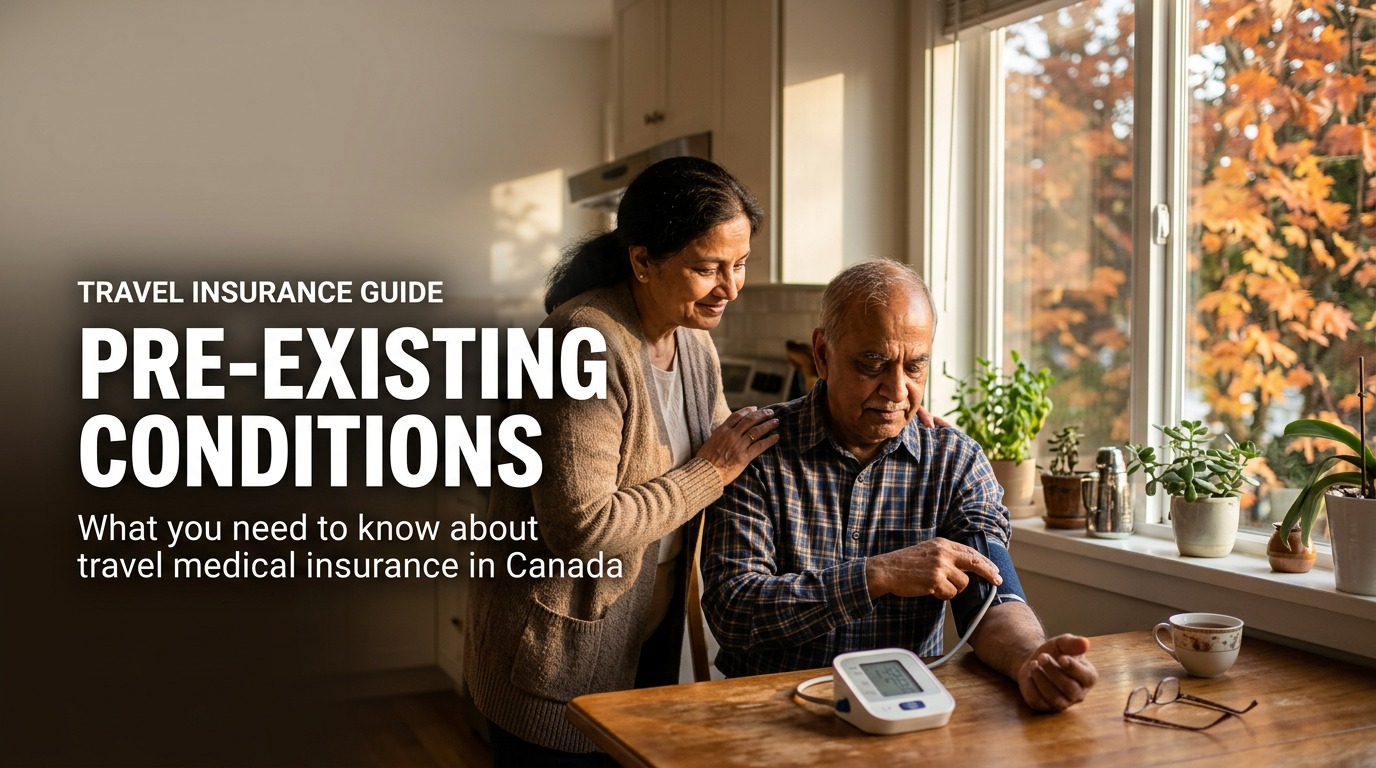
Planning a winter getaway to the United States or a long-awaited international holiday should be an exciting milestone. However, if you are managing a chronic health concern like mild hypertension, diabetes, or joint issues, booking a trip often comes with a heavy dose of anxiety. You might find yourself wondering whether your regular daily pill counts as a pre-existing condition, or if a recent tweak to your prescription by your family doctor will completely invalidate your emergency medical coverage while you are abroad. In Canada, travel insurance providers look closely at your medical history before issuing a policy, and misunderstanding how they evaluate your health can lead to devastating out-of-pocket expenses if an unexpected medical emergency occurs away from home.
To protect your health, your finances, and your peace of mind, you need absolute clarity on how insurance underwriters define pre-existing conditions and evaluate your medical stability. When exploring options on our travel insurance hub, understanding these foundational rules ensures you choose a policy that matches your actual health profile rather than leaving gaps in your protection.
What Actually Counts as a Pre-Existing Condition in Canada?
In the context of Canadian travel insurance, a pre-existing condition is generally defined as any medical condition, symptom, illness, or injury for which you received medical consultation, diagnosis, treatment, or prescription medication during a specific period before your departure date. This look-back period varies widely depending on your age, the specific insurance provider, and the type of policy you select, often ranging from 90 days to 365 days prior to the day your trip begins. Many travellers make the dangerous assumption that if a condition is well-managed or minor, it does not need to be declared. For instance, a 58-year-old traveller taking a daily blood pressure medication might assume hypertension is just a normal part of aging rather than a medical condition. Insurance companies, however, view it strictly through the lens of their underwriting guidelines. If you take medication for high blood pressure, diabetes, or cholesterol, it is almost always classified as a pre-existing condition that must be disclosed on your medical questionnaire.
Failing to disclose a condition, even by accident, can give an insurer grounds to deny a claim entirely. If you suffer a sudden cardiac event while abroad, the claims department will review your Canadian medical records. If they discover a history of treated hypertension that was omitted from your application, your claim for tens of thousands of dollars in hospital fees could be rejected. Complete transparency and a careful review of your medical files are your best defense against unexpected claim denials.
Understanding the Stability Period (The Rule That Catches Travellers Out)
Even if you openly declare a pre-existing condition, having the condition does not automatically mean it is excluded from coverage. Instead, insurers evaluate whether the condition is considered stable. The stability period is a pre-determined window of time—such as 90, 180, or 365 days before your departure—during which your medical condition must not have worsened, required new treatment, or undergone changes in medication. If your condition has remained completely quiet and unchanged throughout that entire window, it is usually covered under your emergency medical policy. If it has changed, the condition is typically excluded, meaning any medical costs arising from it while you travel will be your personal responsibility.
The nuance of the stability clause is where many well-prepared travellers get caught out. Insurers do not just look at whether you had a heart attack or a stroke; they look at subtle shifts in symptoms, frequency of physician visits, and investigative tests. If your doctor recommended an adjustment or a referral to a specialist during your stability window, that single recommendation can reset your stability clock and alter your insurance eligibility.
How Medication Changes Impact Your Travel Medical Coverage
Medication is the most common variable that disrupts stability periods for Canadian travellers. Let us examine a common scenario: you have been taking a blood pressure pill for three years with no issues. Six months ago, during a routine checkup, your doctor noticed your reading was slightly elevated and increased your dosage. You feel great, and your blood pressure has been normal ever since. However, because your dosage was altered within the last six months, your condition may fail the standard 180-day stability test required by many travel insurance policies. Under most standard definitions, any increase or decrease in dosage, stopping a medication, or starting a brand-new prescription counts as a medication change that resets the stability clock.
There are exceptions to this rule. Routine adjustments of insulin under the direction of a physician, or adjustments to blood thinners monitored through regular lab work, are sometimes treated with specific contractual caveats by insurers. Always read the policy wording carefully or consult with an expert to see how specific drug changes impact your coverage. Beyond travel plans, maintaining comprehensive overall coverage is vital, which is why many Canadians also pair their travel protection with robust health and dental insurance for everyday peace of mind at home.
Step-by-Step: Declaring Your Medical History Accurately
Navigating medical questionnaires can feel intimidating, but following a structured approach removes the guesswork and ensures complete accuracy. Use this practical step-by-step guide before you apply for coverage:
- Pull together a complete, current list of all prescription medications, including exact dosages and the dates you started taking them.
- Review your appointment calendar and medical records for the past 12 months to identify any specialist visits, diagnostic tests, or emergency room trips.
- Check with your family doctor to confirm your current diagnosis codes and whether any ongoing conditions are officially classified as stable.
- Compare different provider questionnaires to find a policy where your specific look-back and stability windows align with your health history.
- Disclose every condition requested by the questionnaire. When in doubt, always declare it rather than assuming it is unimportant.
Common Mistakes That Can Lead to a Denied Claim
When claims are denied, it rarely stems from malicious intent; rather, it usually results from honest misunderstandings of insurance terminology. One frequent mistake is assuming that feeling healthy equals being medically stable according to the insurance contract. Your personal feelings do not override the clinical definition written in your policy booklet. Another major pitfall is relying on verbal advice from an unqualified source. If a friend tells you that mild high blood pressure does not matter, do not take their word for it. Always rely on written policy definitions and confirm details with your provider.
Travellers also occasionally forget to update their insurance provider if their health changes between the date they purchase the policy and the day they board their flight. If you visit the doctor and receive a new prescription two weeks before your departure, your stability status has changed, and you must notify your insurer immediately to prevent claim complications.
Frequently Asked Questions About Pre-Existing Conditions
Does a routine doctor's visit reset my stability period?
Generally, a routine checkup where your doctor confirms your condition is stable and makes zero changes to your treatment plan does not reset your stability period. However, if the physician orders new diagnostic tests, recommends a specialist referral, or suggests any change in medication, that visit may impact your stability window.
What if my condition is completely controlled by medication?
Being controlled by medication does not mean the condition disappears. Insurers still evaluate whether the medication dosage or frequency has remained constant throughout the required stability period. If your dosage has been steady for the entire look-back window, the controlled condition is often eligible for coverage.
Are minor ailments treated differently than chronic conditions?
Some policies include specific clauses for minor ailments, defining them as conditions that required only minor medication adjustments or minimal treatment. However, definitions vary greatly between insurers, so you should never assume a condition is minor without verifying how it is classified in the policy wording.
What documents do I need to prove my medical stability?
In the event of a medical claim, the insurer may request your complete Canadian medical history, including doctor consultation notes, prescription pharmacy printouts, and hospital records. Keeping an organized folder of your medical appointments and prescription refill dates makes assembling these records much easier if needed.
If you are evaluating supplementary coverage for family members or visitors coming to Canada, you can also explore our specialized non-medical insurance options for additional flexibility. For tailored guidance or to speak directly with an expert who can review your stability timeline, please contact us today.
Disclaimer: This article is for informational purposes only and does not constitute financial or legal advice. Please speak to a licensed Insure4Me advisor for personalized recommendations.