
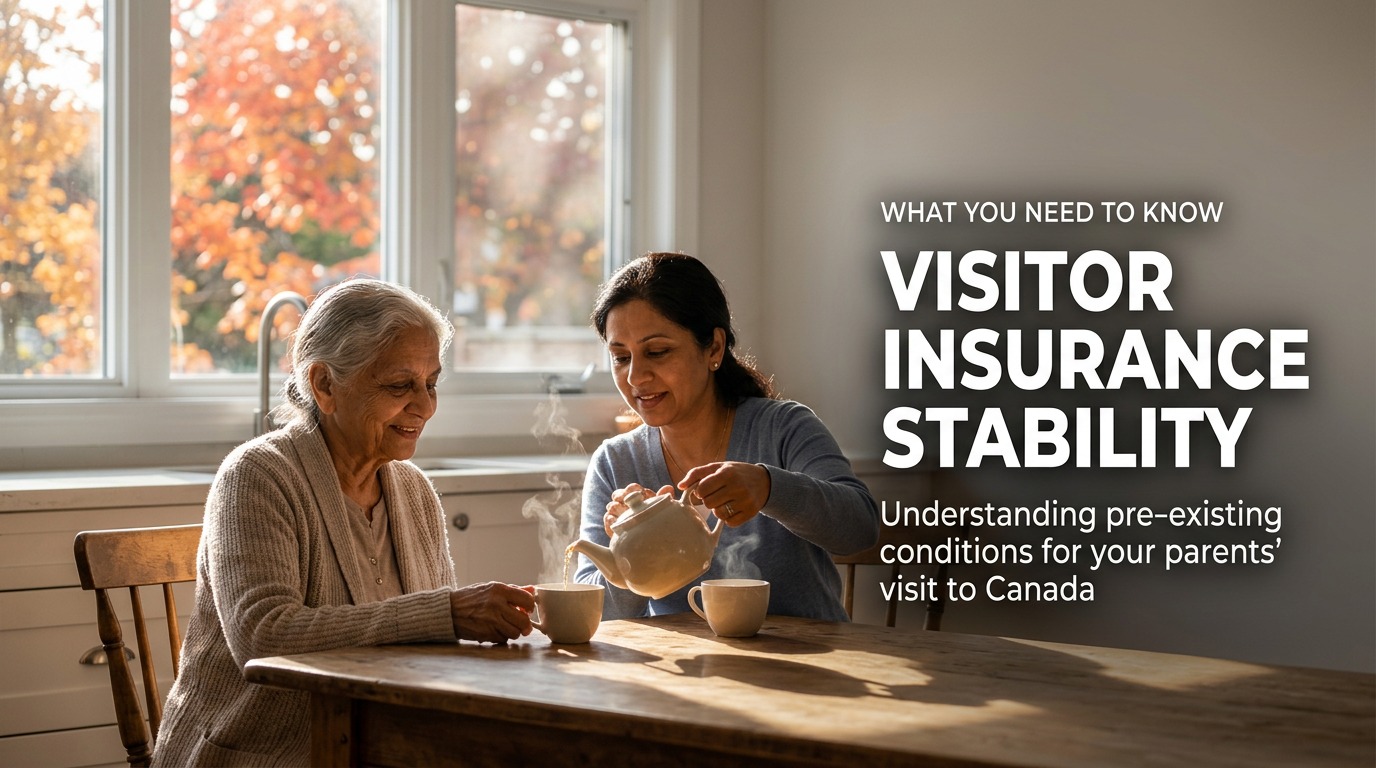
Every autumn and winter, thousands of adult children across Canada prepare to welcome aging parents and grandparents for extended holiday visits. Amidst booking flights and preparing guest rooms, purchasing emergency medical insurance is a critical checklist item. Because visitors to Canada are completely ineligible for provincial health plans like Ontario Health Insurance Plan (OHIP) or the Medical Services Plan (MSP) in British Columbia, a sudden medical emergency can result in catastrophic financial fallout. Published emergency hospital costs for non-residents in Canada can easily reach $13,110 or more per day in intensive care units. Yet, many families make the mistake of buying generic visitor insurance policies without reading the fine print regarding pre-existing conditions, only to discover later that a crucial stability clause voids coverage.
Why Regular Visitor Insurance Isn't Enough When Parents Have Managed Health Conditions
When your mother or grandfather takes daily medication for hypertension, diabetes, or arthritis, standard travel insurance brochures can create a false sense of security. You might assume that because their condition is managed and they feel fine, any related health event during their stay in Vancouver, Toronto, or Calgary will be fully covered. Unfortunately, Canadian underwriters operate under strict contractual definitions. If a policy specifies that pre-existing conditions must be stable for a specific look-back period before the effective date, any unexpected flare-up tied to that condition can be denied if the stability window was violated. Families often find themselves facing tens of thousands of dollars in medical debt simply because they misunderstood how a routine prescription refill or checkup impacted their policy status.
What Canadian Underwriters Actually Mean by Pre-Existing
To prevent denied claims, you must first understand how insurance companies define a pre-existing medical condition. In the context of visitor and super visa insurance, a pre-existing condition is generally any medical condition, illness, or injury for which the insured person showed symptoms, received medical treatment, underwent diagnostic tests, was prescribed medication, or was hospitalized during a specific time frame prior to the policy start date. Common examples include high blood pressure, type 2 diabetes, mild asthma, and joint degeneration. Even if a condition has not required a hospital visit in years, if the traveler takes a daily pill to control it, underwriters classify it as pre-existing, making the stability clause the single most important factor in your policy selection.
The Stability Period: The Rule That Decides Whether a Claim Gets Paid
The stability clause requires that a pre-existing medical condition remain completely unchanged for a designated look-back window—most commonly 90 days, 180 days, or even 365 days depending on the traveler's age and the specific insurance provider (such as TuGo, Secure Travel, or 21st Century). During this stability window, the insured individual must experience no new symptoms, no increase in symptom severity or frequency, no new medical treatment, no hospitalization, and crucially, no changes to their medication regimen. If an emergency occurs while visiting Canada and the insurer's claims adjusters review medical records from the home country, they will audit this exact stability window. If they find a discrepancy, the claim can be formally rejected.
What Triggers a Stability Clock Reset (And What Doesn't)
One of the most terrifying realizations for adult children is learning how easily a stability clock can be reset. For example, if your father's family doctor in his home country decides to reduce his blood pressure medication dosage two months before his flight because his numbers improved, that positive adjustment actually resets the stability clock under many standard policies. Other common triggers include experiencing a new or worsening symptom, having a doctor recommend further diagnostic investigation, or awaiting test results. Conversely, routine, scheduled checkups where no medication changes or new symptoms occur generally do not disrupt stability, provided the doctor confirms the condition is completely controlled. When financial planning meets family caregiving, unexpected medical emergencies can strain household budgets. Just as careful retirement planning requires monitoring changing thresholds—similar to how Canadians track RRSP contribution limits to avoid tax penalties—visitor insurance requires rigorous attention to look-back windows to avoid devastating medical bills.
Decision Checklist: How to Match Your Visitor's Medical History to the Right Policy Wording
When shopping for coverage through travel insurance brokers or specialized visitor markets, use this practical checklist to protect your family:
- Audit all current prescription medications and dosages taken over the last 180 days.
- Confirm with the traveler's home physician that no dosage adjustments or medication switches are planned before departure.
- Check whether the insurer requires a 90-day or 180-day stability window based on the traveler's age bracket.
- Verify if stable chronic conditions (like hypertension or controlled diabetes) are automatically covered after the stability period elapses.
- Review whether routine blood tests or preventive screenings conducted abroad will be misconstrued as investigating new symptoms.
Frequently Asked Questions About Visitors to Canada Insurance Stability Rules
Does taking daily blood pressure medication automatically exclude my mother from coverage?
No. Taking daily medication for a stable condition does not automatically exclude coverage, provided the condition has remained completely stable throughout the policy's required look-back period (such as 90 or 180 days). The key is that the medication dosage and frequency must not have changed during that window.
What happens if my grandfather has a routine checkup or blood test while visiting?
Routine, scheduled checkups that do not uncover new symptoms, lead to new diagnoses, or prompt medication changes generally do not affect ongoing coverage. However, if a test leads to a new treatment plan or reveals a worsening condition, insurers examine whether symptoms predated the policy effective date.
Are pre-existing condition rules different for Super Visa insurance versus standard visitor insurance?
While both types of policies evaluate pre-existing conditions and stability clauses, Super Visa insurance mandates a minimum coverage amount ($100,000) and must be purchased from a Canadian insurer. Many Super Visa plans offer specific pre-existing condition add-ons or riders that incorporate strict stability wording, making comparison shopping essential.
How does an insurer verify a pre-existing medical condition after an emergency happens?
When a claim is filed, the insurance company's assistance provider requests complete medical records from the patient's attending physicians both in Canada and in their home country. They review consultation notes, pharmacy refill histories, and diagnostic reports to determine if the condition was stable during the mandatory look-back period.
Disclaimer: This article is for informational purposes only and does not constitute financial or legal advice. Please speak to a licensed Insure4Me advisor for personalized recommendations.