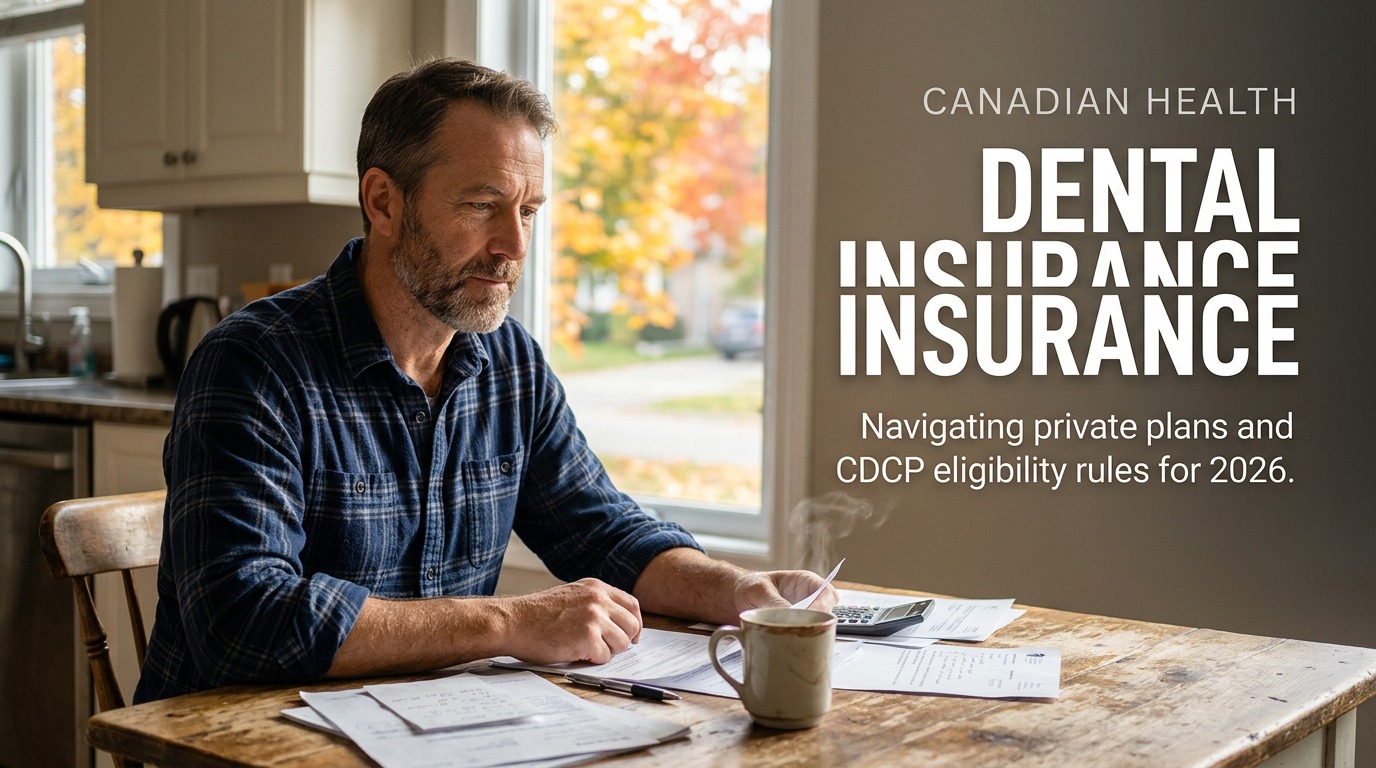
As the Canada Dental Care Plan (CDCP) continues its phased rollout through 2026, thousands of self-employed individuals, part-time workers, and seniors find themselves caught in a web of complex eligibility rules. A primary source of confusion is whether holding a private plan—or having access to one through a partner—disqualifies you from public aid. Many Canadians rashly drop their comprehensive private health plans to chase government dental benefits, only to discover that they have inadvertently exposed themselves to massive out-of-pocket expenses for prescription drugs, vision care, and paramedical services. To make matters worse, misunderstandings around the attestation process can lead to serious administrative headaches.
Before making any drastic changes to your coverage, it is vital to understand the nuances of the CDCP rules. For a broader overview of how public dental initiatives interact with private options, you can review our detailed Canadian Dental Care Plan guide. Furthermore, evaluating your overall medical needs is essential, as detailed in our guide on health and dental benefits. Below, we break down the critical traps, financial risks, and decision frameworks you need to navigate private dental insurance versus the CDCP.
The Big Misconception: How CDCP Views "Access" to Private Dental Insurance
One of the most frequent misconceptions is that you can simply opt out of a workplace or individual private plan to become eligible for the CDCP. According to official federal guidelines, the CDCP requires applicants to attest that they do not have access to private dental insurance or coverage. Crucially, the government defines 'access' broadly. If you are eligible for a workplace benefits package—even if you actively choose to decline it or stop paying for your individual plan—you may still be considered as having 'access,' which can trigger disqualification traps.
Furthermore, spousal and partner information plays a massive role in your application. If your spouse or partner has access to a comprehensive workplace group benefits plan that includes family dental coverage, you are generally considered to have access through that plan as well. This catches many self-employed Canadians by surprise, as they assume their individual tax filing status shields them from their partner's workplace benefits. Verifying adjusted family net income alongside spousal insurance access is a core pillar of the CDCP verification framework.
The Hidden Trap of Dropping Bundled Private Health & Dental Plans
Most individual and family insurance policies sold in Canada are bundled products. They package dental care together with vital non-dental health benefits, such as prescription drug coverage, massage therapy, chiropractic care, vision care, and medical equipment. If you decide to cancel your private insurance plan solely to qualify for the CDCP, you are throwing away coverage for everyday health expenses that the government program does not touch.
For a 52-year-old self-employed Canadian managing chronic prescriptions or requiring regular paramedical treatments, dropping a private health bundle to save on monthly dental premiums often backfires. The out-of-pocket costs for prescription medications alone can quickly eclipse any savings gained from public dental subsidies. Before altering your coverage, you should explore tailored options through our health and dental insurance page to see how individual policies can complement your financial plan without risking your comprehensive health safety net.
Decision Table: Sticking with Private Insurance vs. Qualifying for the CDCP
To help clarify your choices, consider the following comparative breakdown based on current 2026 rules: 1. Household Net Income Under $70,000 with Zero Private Options: Qualifying for the CDCP makes complete financial sense, as public subsidies cover a vast majority of eligible dental procedures without private overhead. 2. Self-Employed with High Prescription Drug Costs: Sticking with a private individual plan is usually superior. Dropping your plan for the CDCP leaves your drug and vision expenses completely exposed. 3. Spouse Has Workplace Benefits: If your partner's group plan covers family dental, you are likely locked out of the CDCP anyway, making private supplemental add-ons or utilizing the workplace plan your only viable paths. 4. Partial Private Dental Coverage Only: If your private plan only covers major restorative work while leaving routine care unmanaged, verify your exact policy terms carefully before attempting to claim government assistance.
What Happens If Your Tax Slips or T4s Don't Match Your Attestation?
When applying for the CDCP, applicants sign an attestation confirming their income levels and lack of private insurance access. The Canada Revenue Agency (CRA) and Health Canada cross-reference these attestations with tax filings and employer-reported data. If discrepancies arise—such as an employer reporting active group benefit availability that you failed to disclose, or a tax filing that exceeds the adjusted family net income threshold—you face serious consequences.
Misrepresenting your access to private dental insurance can result in retroactive disqualification, demands for repayment of dental benefits already received, and potential future penalties. For Canadians transitioning between jobs or fluctuating between self-employed contracts and contract work, maintaining meticulous records of your benefit eligibility periods is essential to avoid accidental non-compliance.
Filling the Gaps: Why Supplemental Health Plans Still Matter for Prescriptions and Paramedicals
Government dental care is a welcome relief for many Canadians, but it is not an all-encompassing health solution. The CDCP specifically targets dental procedures and does not pay for prescription drugs outside of specific hospital settings, nor does it cover registered massage therapy, acupuncture, psychological counseling, or advanced vision care. For self-employed individuals and families, these non-dental benefits represent a massive portion of annual out-of-pocket health spending.
Structuring your insurance portfolio intelligently means recognizing that public and private plans can sometimes coexist or serve entirely different purposes. If you do not qualify for the CDCP due to income thresholds or spousal workplace access, securing a robust private health plan ensures your entire medical wellness budget remains protected against unexpected healthcare bills.
FAQ
Can I have both private dental insurance and the CDCP?
No. If you have active access to private dental insurance—whether through an individual plan, a retiree plan, or a workplace benefits package—you are not eligible for the CDCP. The program is specifically designed for Canadians who have zero access to private dental coverage.
What if my employer offers benefits, but I decline them? Does that count as "having access"?
Yes. According to federal guidelines, having the option to enroll in an employer-sponsored or workplace group benefits plan constitutes 'having access,' even if you voluntarily choose to opt out. Declining your workplace plan does not make you eligible for the CDCP.
If my spouse has a workplace plan that includes dental, am I automatically disqualified?
Generally, yes. If your spouse's workplace plan provides family coverage that extends to you, the CDCP considers you to have access to private dental insurance through that spousal policy, rendering you ineligible for the public program.
What if I drop my private plan mid-year—can I apply immediately?
Voluntarily dropping your private insurance does not bypass the eligibility rules. Furthermore, doing so leaves you immediately vulnerable to high out-of-pocket costs for prescriptions and other non-dental medical needs. Always verify your eligibility status thoroughly before canceling any existing coverage.
Are benefits under the CDCP tax-free in Canada?
CDCP benefits are direct payments or subsidies toward dental care costs rather than direct cash payouts to individuals, meaning they are not treated as taxable income on your tax return. However, certain employer-provided dental benefits in specific jurisdictions (such as Quebec's provincial plans) carry calculated taxable benefit rates, like the 2026 PSDCP annual taxable benefit rate of $1,403.10.
Disclaimer: This article is for informational purposes only and does not constitute financial or legal advice. Please speak to a licensed Insure4Me advisor for personalized recommendations.