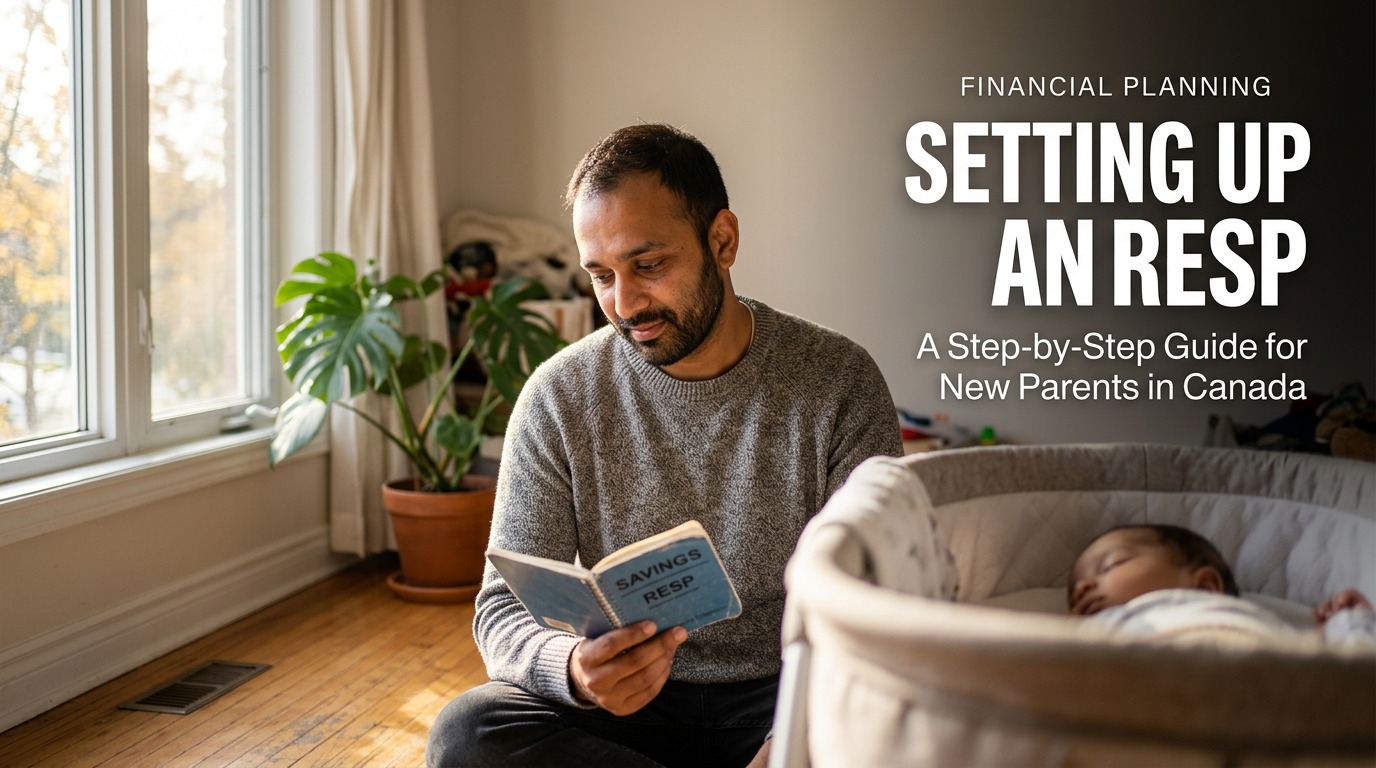

Planning for a child or grandchild's post-secondary education requires understanding complex federal rules, income thresholds, and contribution caps. With tuition and living expenses rising steadily across Canada, utilizing a Registered Education Savings Plan (RESP) remains one of the most effective strategies for parents, grandparents, and family guardians. However, navigating the system requires more than simply opening an account at a local bank or credit union. You must understand the specific federal limits, optimize government matching grants, and structure your withdrawals strategically to avoid unnecessary tax traps, unexpected administrative penalties, and lost growth opportunities over the long term. As tuition costs continue to escalate year over year, taking a proactive and informed approach to educational savings ensures that your children or grandchildren can pursue their academic ambitions without being crippled by massive student loan debt upon graduation. Furthermore, incorporating proper financial protection into your household budget ensures that unexpected life events do not derail your children's educational future.
Building a robust financial foundation for your family involves balancing multiple competing priorities, from everyday living expenses and retirement savings to safeguarding your income against unforeseen emergencies. Many parents find that securing proper insurance protection acts as a vital safety net, ensuring that mortgage payments, household bills, and university funds remain fully funded no matter what happens. To explore comprehensive coverage options that protect your family from financial hardship, you can speak directly with our licensed professionals or visit our Contact Us page for personalized guidance tailored to your specific household circumstances. Integrating educational savings with a solid life and health insurance strategy creates a bulletproof financial plan that protects your loved ones through every stage of life.
2026 RESP Contribution Limits and Grant Rules at a Glance
The federal government administers RESP guidelines federally via Employment and Social Development Canada (ESDC) and the Canada Revenue Agency (CRA). While provincial additions like Quebec's QESI or Saskatchewan's SAGES offer localized incentives, the core lifetime limits apply nationwide. The lifetime contribution limit is $50,000 per beneficiary across all plans. Although there is no annual dollar limit, the Canada Education Savings Grant (CESG) matches 20 percent on the first $2,500 contributed annually. This translates to a base grant of $500 per year, or up to $1,000 per year if you are utilizing catch-up room from previous years. The absolute lifetime maximum for the basic CESG is $7,200 per beneficiary. To complement your overall family financial security, many parents also pair their savings strategy with comprehensive financial reviews to protect household cash flow against unexpected medical costs and economic downturns. Understanding how these annual caps interact with government matching grants allows you to optimize every dollar you set aside for your child's future.
Maximizing the 20 percent CESG match requires careful timing of your contributions. If you miss a year of contributing, you can carry forward the unused grant room, but you can only catch up on one previous year's worth of grant matching per calendar year, alongside the current year. This means you cannot simply drop a large lump sum of $25,000 into the account on the eve of your child entering university and expect to capture all the missed government grants from previous years. The government restricts grant catch-ups to a maximum of $500 in matching funds ($2,500 in contributions) per year in addition to the current year allocation. Therefore, consistency is vital. Setting up automatic monthly or bi-weekly transfers into the RESP ensures that you steadily approach the annual $2,500 optimal threshold without having to scramble at the end of every calendar year. This disciplined habit eliminates guesswork and maximizes the free government money available to your family.
New 2026 Additional CESG Income Thresholds Explained
A crucial update for families to understand involves the ESDC Notice #1114 Additional CESG income brackets. These brackets dictate whether low- to middle-income families qualify for enhanced matching rates on the first $500 of annual contributions. For 2026, the updated family net income brackets are clearly defined by federal guidelines. If your family net income is up to $58,523, you qualify for the maximum additional CESG matching rate. If your family net income is over $58,523 up to $117,045, you qualify for partial additional CESG matching. For family net incomes above $117,045, the standard basic 20 percent CESG applies without any additional enhancement. Furthermore, eligible low-income families may qualify for the Canada Learning Bond (CLB), which provides up to $2,000 with zero personal contribution required. Aligning your investment approach with these exact brackets ensures you extract maximum value from government incentives without accidentally leaving matching dollars on the table.
Navigating these income brackets requires keeping accurate track of your line 23600 net income from your annual Notice of Assessment (NOA) issued by the CRA. Because family net income is assessed using figures from two years prior for certain federal programs, or the base tax year depending on specific ESDC validation schedules, knowing your standing relative to the $58,523 and $117,045 thresholds is critical. If your household experiences a significant change in income due to a career shift, job loss, or business restructuring, you should consult with a financial advisor to understand how those fluctuations might temporarily alter your matching tier. By staying informed about these adjustments, you can time your contributions strategically during years when your household income falls into a more advantageous subsidy bracket.
The Three Biggest RESP Mistakes Parents Make
Even well-intentioned family subscribers frequently stumble into costly administrative and tax pitfalls that diminish their savings. The first major mistake is making lump-sum over-contributions that exceed the $50,000 lifetime cap per beneficiary. The Canada Revenue Agency imposes a strict 1 percent per month tax penalty on lifetime over-contributions until the excess amount is formally withdrawn from the account. The second mistake involves confusing Educational Assistance Payments (EAPs) with Post-Secondary Education (PSE) withdrawals. Original contributions represent your own after-tax money and come out completely tax-free as PSE, whereas investment growth and government grants form EAPs, which are taxable income in the student's hands during their study years. The third mistake is waiting until high school to begin funding the account, thereby losing valuable decades of compounding interest and precious catch-up grant room. Proper planning avoids these costly missteps entirely.
To elaborate further on the danger of over-contributions, many parents forget to track multiple RESP accounts if grandparents or relatives have also opened plans for the same child. Because the $50,000 lifetime limit applies per beneficiary across all plans combined, uncoordinated gifting can easily push the child past the statutory threshold without the primary subscriber realizing it. It is vital to maintain open communication among all family members contributing to the child's education fund. Regular reviews of account statements and contributions prevent accidental penalties from the CRA. Additionally, understanding how EAPs are taxed means you can time student withdrawals during years when the student has little to no other taxable income, resulting in virtually zero tax liability on the growth and grant portions of their withdrawals.
What Happens If Your Child Does Not Go to School?
A common parental worry is what happens to the RESP if the child decides against pursuing post-secondary education, trade school, or professional certification programs. Fortunately, families have several viable pathways to protect their invested capital. First, you can transfer the accumulated funds and grant room to a sibling if they are under the age of 21. Second, under specific conditions, you can roll over unused RESP savings into a Registered Disability Savings Plan (RDSP) or transfer accumulated income into your own Registered Retirement Savings Plan (RRSP), provided you have available contribution room and the plan has been open for at least ten years while the beneficiaries are at least 21 years old. Finally, if you must collapse the plan entirely, your original contributions return to you tax-free, but all government grants must be repaid directly to the ESDC, and accumulated earnings are subject to regular income tax plus an additional 20 percent penalty tax.
Conclusion and Next Steps for Your Family
Maximizing your child's educational future requires proactive strategy, careful tracking of annual contribution limits, and a firm grasp of the 2026 CESG income thresholds. By avoiding common over-contribution pitfalls and structuring your withdrawals wisely, you can significantly reduce the financial burden of post-secondary education. To ensure your education savings plan aligns seamlessly with your overarching financial security and wealth preservation goals, consult with our expert advisors today. Whether you are opening your first RESP account or optimizing an existing portfolio, professional guidance makes all the difference in achieving long-term financial success for your household.